
Edelstahl
Zuschnitt und Lohnfertigung
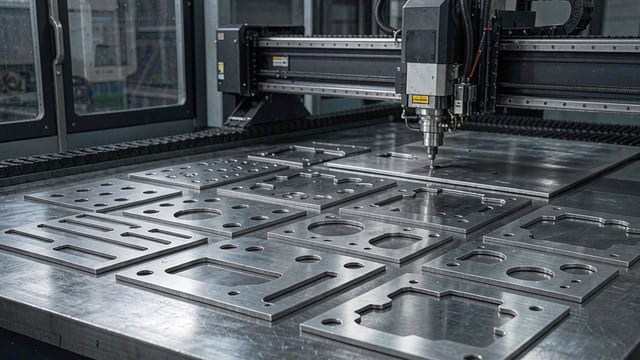
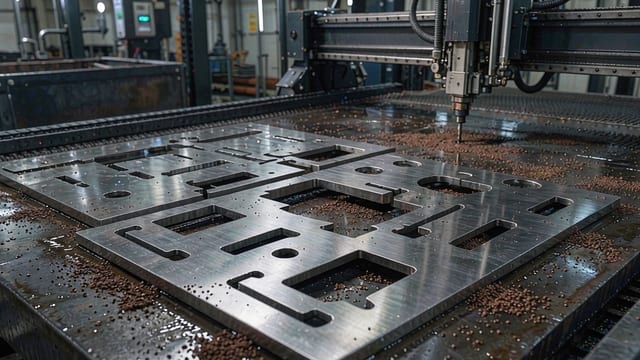
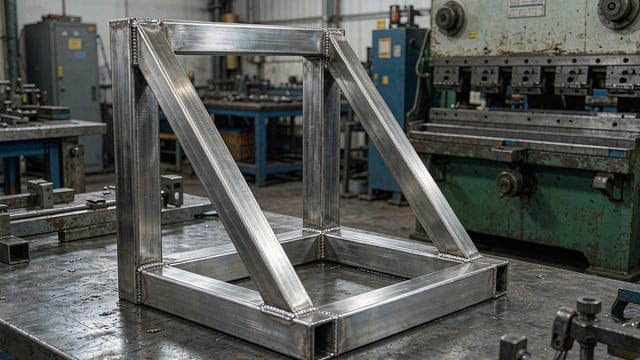
Laserschneiden, Wasserstrahlschneiden, CNC-Biegen, Stanzen und Schweißen — nach Zeichnung, vom 0,3 mm Blech bis zum 80 mm Grobblech.
0,3–80 mmDicke
≤ 3000 mmBreite
Lieferbare Spezifikation
| Werkstoffgüten | Dicke | Breite / Durchmesser | Norm |
|---|---|---|---|
| 304 · 316L · 430 · 2205 | 0,3–80 mm | ≤ 3000 mm | ASTM A240 / EN 10088-2 |
Die angegebenen Bereiche entsprechen dem Standardlieferumfang; Sondergrößen fertigen wir auf Bestellung. Die Dicke ist Nenndicke — die Toleranz richtet sich nach ASTM A480 / EN 10088-2.
Typische Anwendungen
- Halter, Stützen und Maschinenschutz
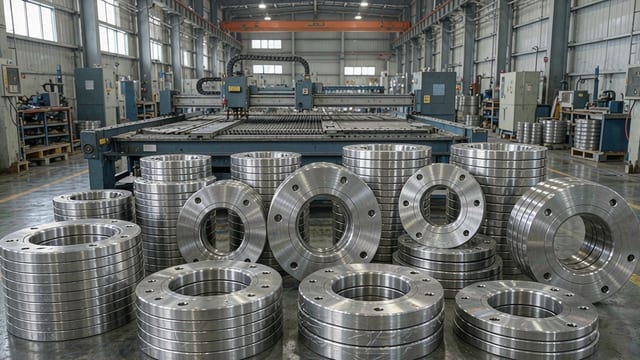
- Tankstutzen, Umlenkbleche und Flansche
- Dekorative Screens und Lochbleche
Lieferung und Prüfung
- Laser ±0,1 mm, Wasserstrahl ±0,2 mm, beim Wasserstrahlschneiden keine Wärmeeinflusszone
- Entgratet, kantenbearbeitet und auf Anfrage passiviert
- Wir kalkulieren nach Ihrer DXF/DWG — senden Sie die Zeichnung mit der Anfrage
Angebot oder technische Beratung gewünscht?
Senden Sie Werkstoffgüte, Abmessung, Menge und Bestimmungshafen — wir antworten innerhalb von 24 Stunden mit FOB / CIF.
Typical applications
Below is where this material actually ends up — the specific parts, not just the industry. Compare it with your own service conditions, or send us the environment and we will advise.
- Robotics — outer covers, mounting plates, guard brackets
- Automation — frame panels, rail mounting plates, fixture locating plates
- Kitchen and appliances — pierced panels, decorative parts
- Architecture — perforated screens, signage, shaped trims
Selection FAQ
- What tolerance does laser cutting hold?
- ±0.1 mm as standard; tighter on thin precision parts, looser on thick plate because of heat effects and kerf taper — assessed against your drawing.
- Why is stainless steel common for robot housings?
- It depends on the environment: cleanroom, food, medical and outdoor applications often use 304/316L because it withstands cleaning agents and moisture. For ordinary industrial settings, powder-coated cold rolled steel is more economical.
- Can you cut directly from drawings?
- Yes — DXF / DWG / PDF. Please state material, thickness, quantity and surface requirement when enquiring.
Not sure which grade fits? Use the grade selector